
A supervisor walks through the center after a particularly difficult shift. The room is quieter than usual. One Public Safety Telecommunicator seems energized by the team effort of getting through the night. Another looks worn down, not because the work was not meaningful, but because the emotional weight of it landed harder than expected. A third is frustrated—not with the mission, but with a process that feels like it is slowing the team down.
If a leader does not know the people under the headset, all three of those signals may look the same.
Over time, I have come to think about this work through what I call the Recognition–Culture Leadership Framework. It is my way of describing how recognition, understanding, and culture connect: recognition begins the process, but it only becomes meaningful when leaders understand what drives the people behind the work. In my first blog, I described the need to understand personalized recognition. In this blog, I will talk about the second step in that framework: understanding what drives people.
In emergency communications, we are comfortable talking about performance, procedures, and operational standards. Those elements are essential to any communications center. But leadership extends beyond managing systems and processes; it requires understanding people.
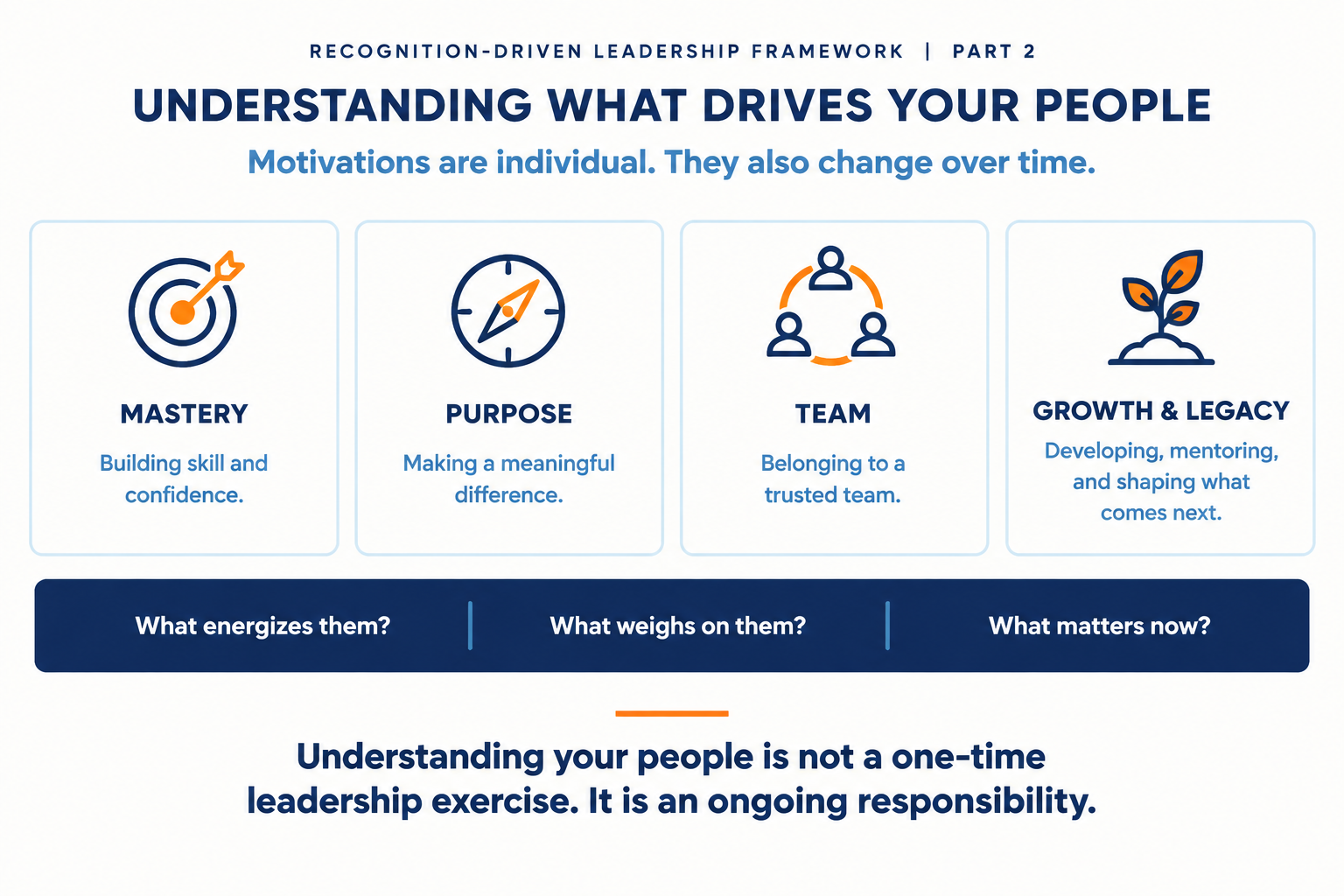
Every professional who works under a headset brings a unique set of motivations, experiences, and goals to the role. Some are driven by mastery, the desire to become exceptionally skilled at call-taking, structured protocols, or radio operations. Others are motivated by purpose, the knowledge that their calm voice and clear instructions can help save lives or bring order to chaos. Some draw their energy from being part of a trusted, high-performing team, while others are inspired by opportunities to grow, specialize, or lead.
The challenge for leaders is recognizing that these motivations are not identical, and perhaps most importantly, they are not static.
In The 5 Languages of Appreciation in the Workplace, Gary Chapman and Paul White highlight an important leadership insight: people experience appreciation in different ways. Some value verbal affirmation, while others connect more strongly with acts of service, shared time, or tangible symbols of appreciation. Their work underscores a simple truth: recognition is most effective when it aligns with what the individual values. But to do that well, leaders must first take the time to understand their people.
That understanding does not come from annual evaluations or occasional hallway conversations. It grows out of consistent interaction, observation, and intentional dialogue. It means asking about career goals and then listening carefully. It means noticing what kind of work people volunteer for, which tasks they take pride in, and what drains or frustrates them. If you want to understand what motivates someone, pay attention to what they celebrate, what weighs on them, and where they invest their energy.
It also takes what Bill Hewlett and Dave Packard, the founders of Hewlett-Packard, called management by wandering around. You have to take the time to talk with your staff, get to know them, identify the areas where they are struggling, and recognize when they are doing amazing things.
That kind of leadership presence matters because it tells people they are more than a position on a schedule. It shows them that they are individuals whose work, concerns, and goals are being noticed.
Leadership research reinforces this. Concepts like self-determination theory remind us that people are more engaged when three core needs are met: autonomy, competence, and relatedness. When leaders recognize how these needs show up for each person, whether it is a desire for more responsibility, opportunities to build expertise, or a stronger connection with the team, they are better equipped to support and recognize them in meaningful ways.
Another reality leaders must acknowledge is that motivation evolves over time.
What drives someone in their second year in the profession may be very different from what drives them after a decade of service. Early in their career, many professionals focus on learning the job, building confidence, and earning the respect of their peers. As they gain experience, motivations often shift toward mentoring others, developing specialized skills, or stepping into leadership responsibilities. And just as important, life changes over time as well. What matters most to a young, single employee may differ greatly from what matters to someone in their 30s who is married with two children, balancing family responsibilities, time demands, and long-term stability. Effective leaders understand that both professional growth and personal circumstances shape motivation, and both deserve attention.
Later in a career, motivations may shift again toward legacy—sharing knowledge, supporting newer professionals, and leaving the organization stronger than they found it. A Public Safety Telecommunicator who once cared most about mastering the console may, years later, care most about ensuring the next generation is prepared to succeed, or moving into a leadership position themselves.
Effective leadership requires recognizing these transitions and adjusting accordingly. A recognition approach that resonates with a new hire may not have the same impact on someone who has been serving for ten years. The message might remain the same, “your work matters”, but the way it is delivered, and the aspects of the work it highlights, should evolve.
This is why understanding your people is not a one-time leadership exercise. It is an ongoing responsibility.
In emergency communications, the work is demanding, and the stakes are high. Professionals are exposed to the stress of difficult calls, high expectations, and long hours. In that environment, leaders who understand what motivates their people are better equipped to support them, encourage them, and recognize their contributions in ways that truly matter.
Recognition is where culture begins, but meaningful recognition is only possible when leaders understand the people behind the work. When leaders invest the time to gain that understanding, they strengthen not only the individuals on their teams but the culture of the entire organization. That is the heart of the Recognition–Culture Leadership Framework: recognition that is personal, grounded in genuine understanding, and consistently connected to the values of the profession.